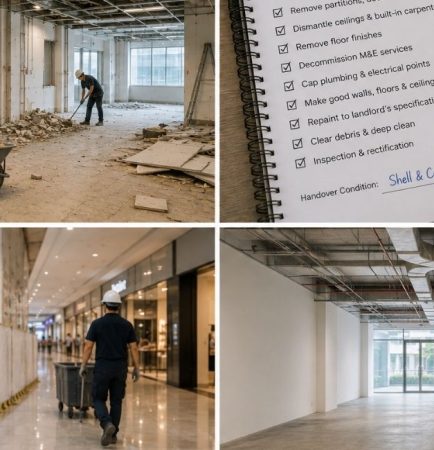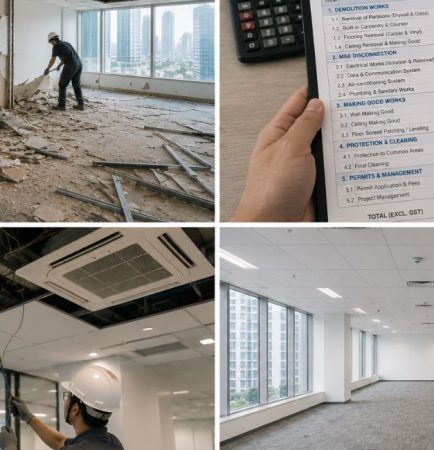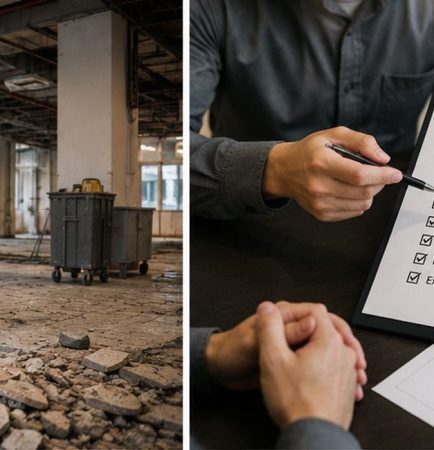

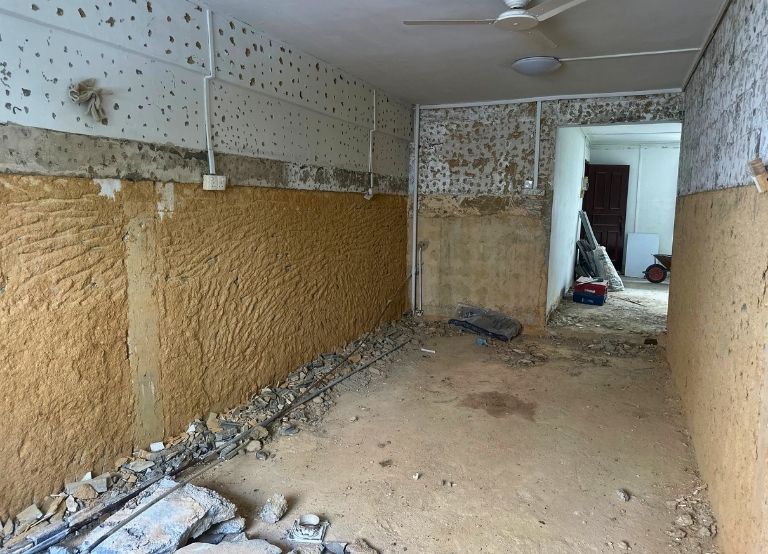


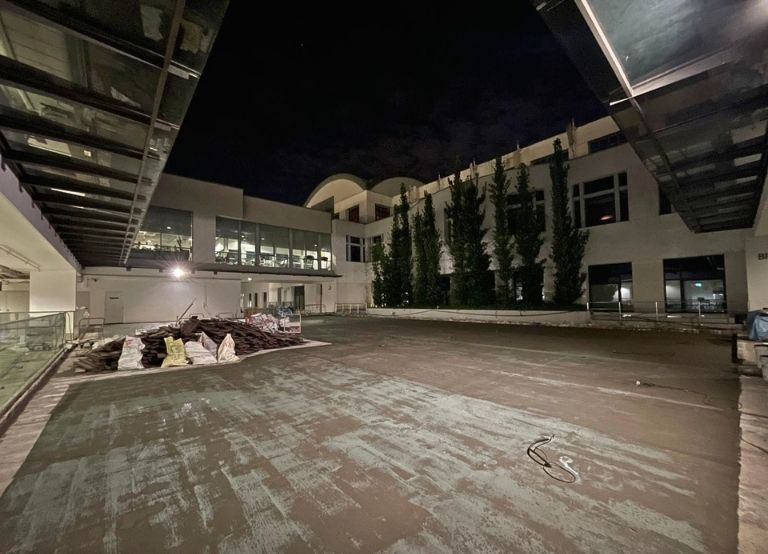
When a commercial lease ends, tenants are often required to return the premises in its original approved condition. This process is known as reinstatement, and the exact requirements are usually set out in the tenancy agreement and landlord’s reinstatement schedule.
Professional reinstatement services in Singapore help tenants manage the complete process from reviewing the landlord’s requirements and dismantling the existing fit-out to restoring surfaces, decommissioning services and supporting the final inspection.
This guide explains what commercial tenants should expect, how costs and timelines are determined, and how to prepare for a smoother lease-end handover.
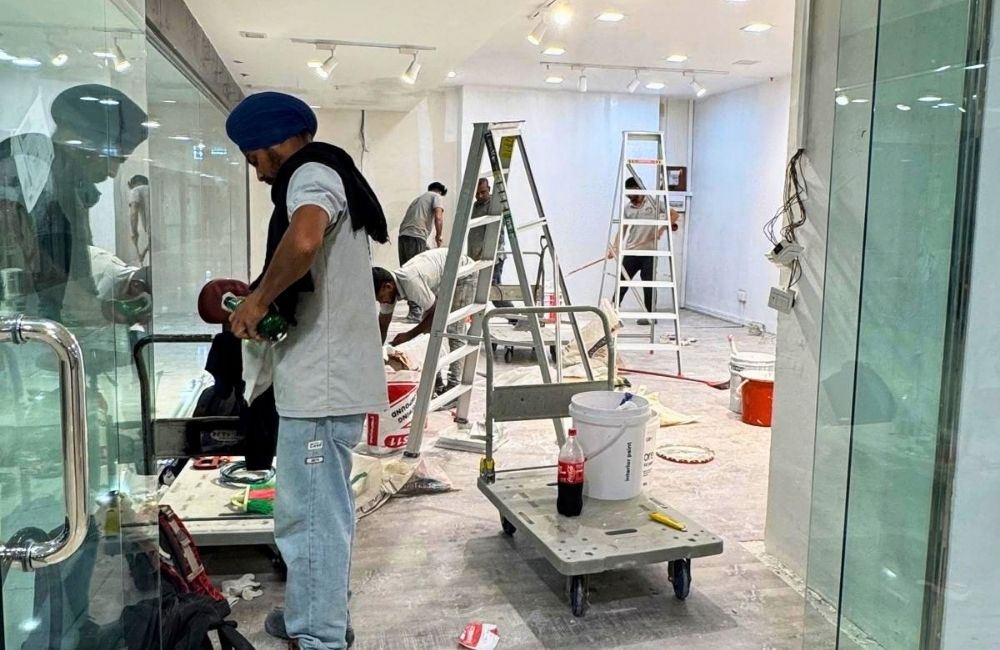
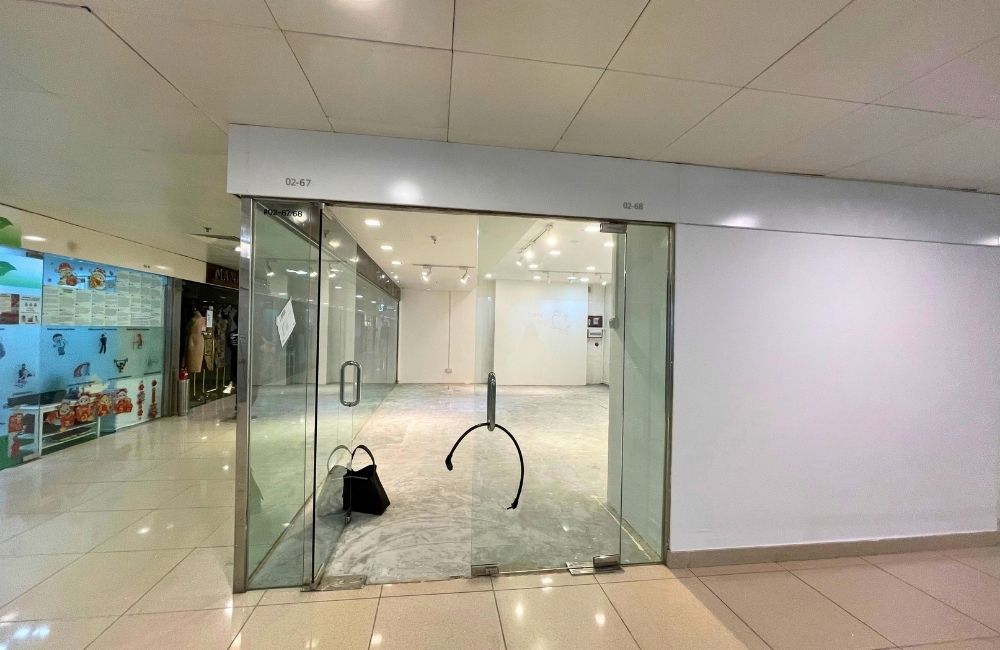
What are commercial reinstatement services?
Commercial reinstatement involves removing tenant-installed features and restoring the unit to the condition required by the landlord.
Depending on the tenancy, this may mean returning the premises to:
- Its original handover condition
- Base-build specification
- Shell-and-core condition
- Another condition agreed upon in writing
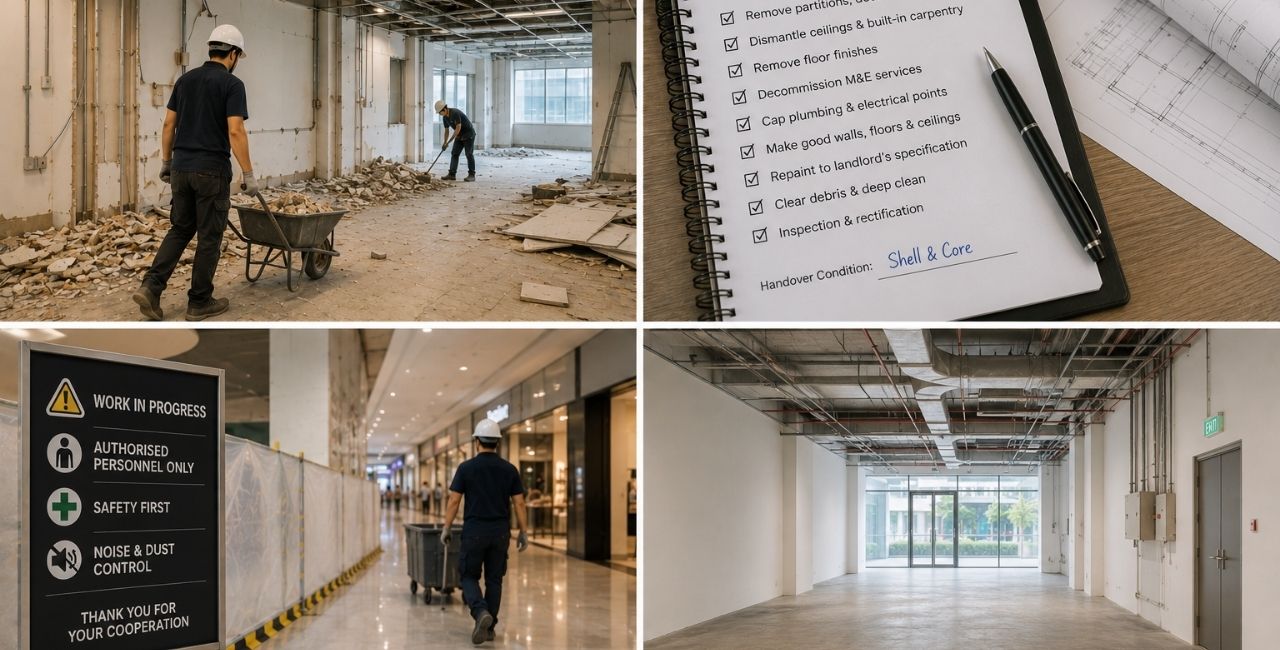
A typical reinstatement scope may include:
- Removing partitions and doors
- Dismantling ceilings and built-in carpentry
- Removing floor finishes or raised flooring
- Decommissioning electrical and data systems
- Capping plumbing and mechanical services
- Removing signage and shopfront installations
- Making good walls, floors and ceilings
- Repainting to the landlord’s specification
- Clearing debris and cleaning the unit
- Completing inspections and rectifications
The landlord’s documentation not a generic contractor checklist should determine the final scope.
Is commercial reinstatement mandatory?
A largReinstatement is commonly required under commercial tenancy agreements in Singapore, but the obligation depends on the terms of your lease.
It may be reduced or waived when:
- The incoming tenant agrees to retain the existing fit-out
- The landlord permits selected installations to remain
- An alternative handover arrangement is formally approved
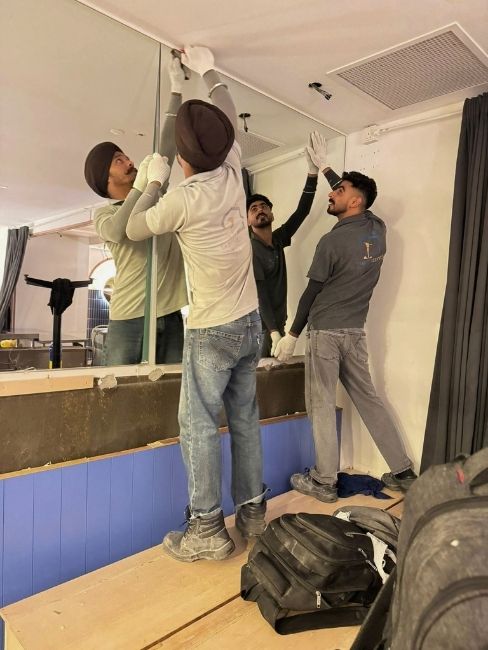
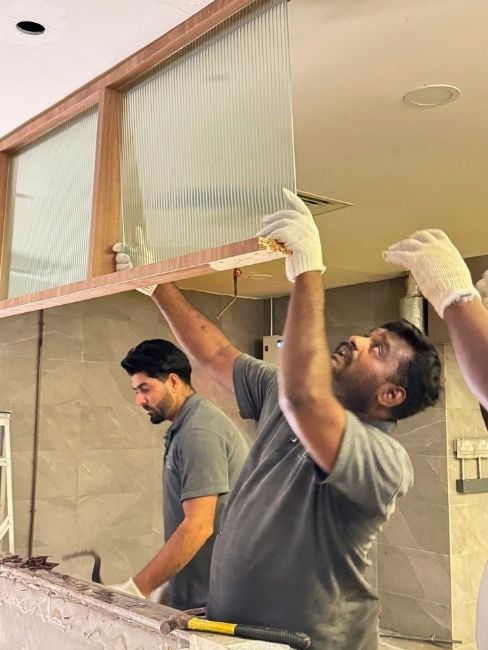
Any exception should be confirmed in writing. A verbal agreement may not be sufficient when the unit is inspected or the tenancy deposit is processed.
How does the scope differ by property type?
Office reinstatement
Office reinstatement may involve removing:
- Drywall and glass partitions
- Workstations and built-in storage
- Carpet, vinyl or raised access flooring
- Suspended ceilings and feature bulkheads
- Data cabling, cable trays and floor boxes
- Tenant-installed lighting and electrical points
- Pantry plumbing
- Air-conditioning modifications
Grade A offices may have detailed base-building specifications for ceiling grids, lighting, floor systems and M&E termination points.
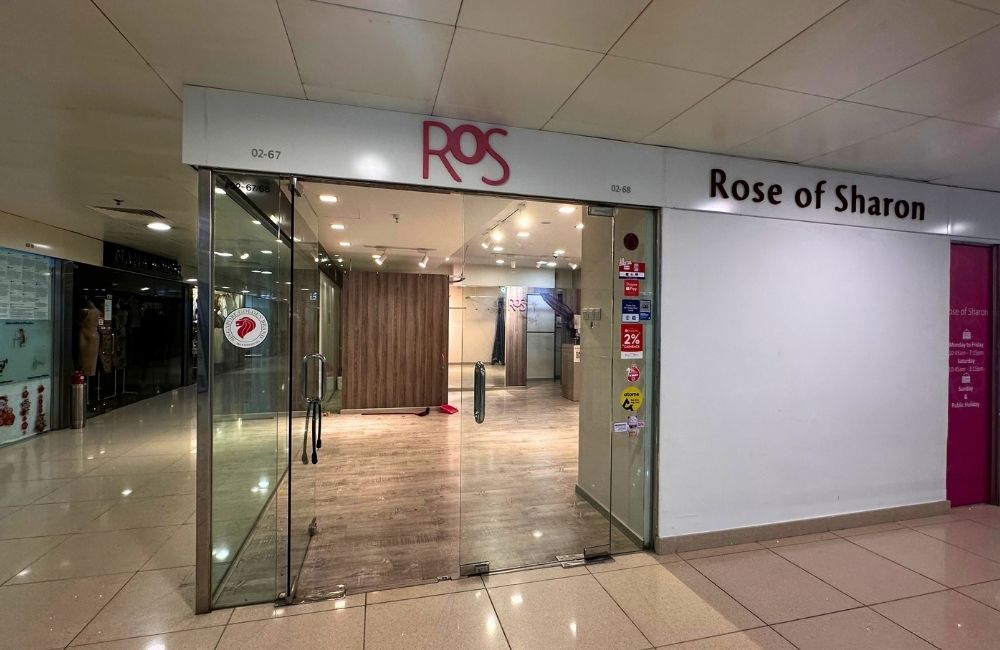
Retail-shop reinstatement
Retail units commonly require:
- Shopfront and signage removal
- Display-wall and shelving dismantling
- Feature-ceiling removal
- Flooring removal
- Electrical and lighting decommissioning
- Restoration of the mall’s original frontage
- Making good service penetrations
Mall management may also impose restricted working hours, loading-bay procedures and common-area protection requirements.
F&B reinstatement
F&B units usually have a more technical scope involving:
- Kitchen-equipment removal
- Counter and cabinet dismantling
- Exhaust hood and ductwork removal
- Grease-trap cleaning or decommissioning
- Gas and plumbing capping
- Fire-suppression system coordination
- Heavy-duty floor and wall finish removal
- Making good exhaust and service penetrations
The ownership of grease traps, common exhaust connections and central services should be confirmed before demolition begins.
Industrial reinstatement
Industrial units vary considerably. Works may include:
- Racking and storage-system removal
- Equipment and machinery dismantling
- Mezzanine or platform removal
- Concrete plinth demolition
- Service-penetration reinstatement
- Epoxy coating removal
- Industrial M&E decommissioning
Structural works and heavy equipment may require additional professional assessment, lifting plans or specialist coordination.
What is the commercial reinstatement process?
1. Review the tenancy documents
Begin with the tenancy agreement, landlord’s checklist, original handover drawings and approved fit-out plans.
Confirm:
- What must be removed
- What may remain
- The required finish standard
- The inspection process
- The lease-end deadline
- Any documentation required at handover
2. Conduct a site assessment
The contractor should inspect the unit and compare its existing condition against the landlord’s requirements.
The assessment should cover:
- Fit-out density
- Flooring and ceiling systems
- M&E modifications
- Access restrictions
- Specialist services
- Waste-removal routes
- Potential permits and approvals
3. Prepare an itemised quotation
A transparent quotation should break down the work by area and trade rather than provide only a lump-sum or square-foot rate.
It should also identify:
- Site protection
- Demolition and dismantling
- M&E decommissioning
- Making-good works
- Painting and finishes
- Specialist contractors
- Waste disposal
- Inspection support
- Exclusions and assumptions
4. Confirm permits and site arrangements
Before mobilisation, the contractor may need to coordinate:
- Building-management permits
- Contractor credentials and insurance
- Risk assessments and work procedures
- Cargo-lift and loading-bay bookings
- Common-area protection
- Noisy-work schedules
- Specialist service isolation
Where building or fire-safety approvals apply, the appropriate professionals should be involved. BCA advises owners to check whether technical or other authority requirements apply even where certain building works do not require plan approval.
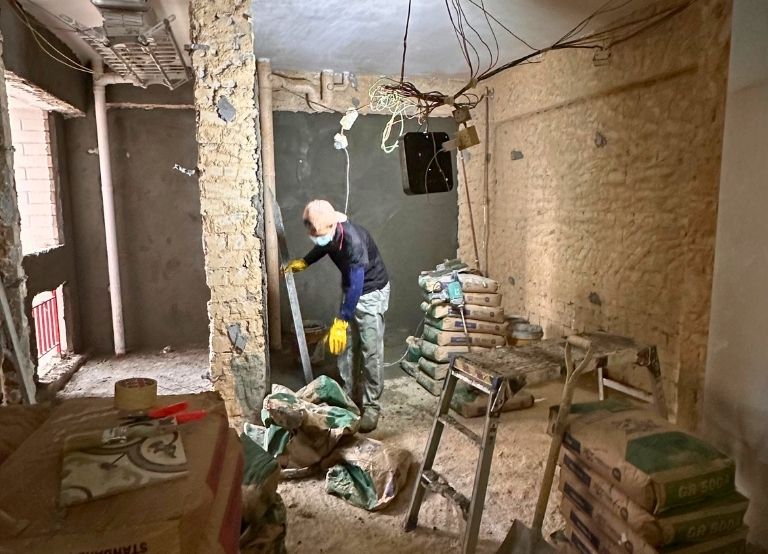
5. Execute the works
The works should follow an approved sequence. Specialist services are usually isolated or decommissioned before general demolition proceeds.
Throughout the project, the contractor should provide progress updates and raise unexpected conditions promptly.
6. Complete inspection and handover
The landlord or a building management representative will inspect the premises. Any agreed defects should be rectified before the unit is formally handed over.
What affects reinstatement cost?
There is no single standard rate for commercial reinstatement services because every unit and tenancy is different.
The main cost drivers include:
- Unit size
- Fit-out density
- Partition and carpentry volume
- Ceiling complexity
- Flooring type
- M&E modifications
- Specialist F&B or industrial systems
- Access and loading restrictions
- Night or weekend work
- Waste volume
- Permit and documentation requirements
- Urgency of the handover deadline
A small but heavily fitted unit may cost more per square foot than a larger, open-plan space.
6. M&E and data-system complexity
Mechanical and electrical works are often among the biggest cost variables in office reinstatement services.
The office may contain:
- Additional electrical circuits
- Data cabling and cable trays
- Floor boxes and power points
- Modified distribution boards
- Air-conditioning alterations
- Supplementary cooling systems
- Fire-alarm or sprinkler modifications
- Pantry plumbing and drainage
- Server-room infrastructure
These services must be safely isolated, removed or returned to the termination points required by building management. Certain works may require the relevant licensed trades, testing or completion documents.
Reinstatement should never involve cutting services and concealing them above the ceiling. The required decommissioning standard should be established before demolition begins.
How long do reinstatement works take?
The programme depends on the size, complexity and approval requirements.
As a general planning guide:
- Small, lightly fitted units may take approximately 5–10 working days
- Medium commercial units may take approximately 10–18 working days
- Large, multi-floor or heavily fitted premises may take 18–35 working days or longer
- F&B and industrial units may require additional time for specialist decommissioning
These estimates assume the necessary permits and site arrangements are in place. Tenants should begin planning as soon as notice to vacate is given.
How can tenants control reinstatement costs?
Clarify the scope early
Ask the landlord to confirm what must be removed and what may remain before quotations are requested.
Use the same scope for every quotation
Contractors cannot be compared fairly if they are pricing different assumptions.
Request itemised pricing
An itemised quotation makes exclusions and potential variations easier to identify.
Allow sufficient lead time
Urgent projects may require additional crews or extended working hours.
Confirm hidden services
Review available M&E drawings and previous renovation records before demolition starts.
Arrange an internal inspection
Resolving defects before the landlord walkthrough reduces the risk of delayed handover.
How should you choose a reinstatement contractor?
Look for a contractor that can demonstrate:
- Experience with your property type
- Clear project and safety management
- Relevant credentials and insurance
- Building-management coordination
- Itemised quotations
- Written variation procedures
- Specialist-trade coordination
- Inspection and handover support
- Relevant commercial case studies
Ask for examples that show the project scope, restrictions, duration, and outcome not only completed photographs.
How Tagline Services manages commercial reinstatement
Tagline Services provides structured reinstatement services in Singapore for offices, retail shops, F&B outlets, industrial units and multi-storey commercial premises.
Our approach includes:
- Reviewing the tenancy and landlord’s requirements
- Conducting a detailed site assessment
- Preparing an itemised scope and quotation
- Coordinating permits, access and building management
- Sequencing demolition and specialist works
- Providing progress updates
- Seeking written approval before variations proceed
- Conducting internal snagging
- Supporting the landlord inspection and final handover
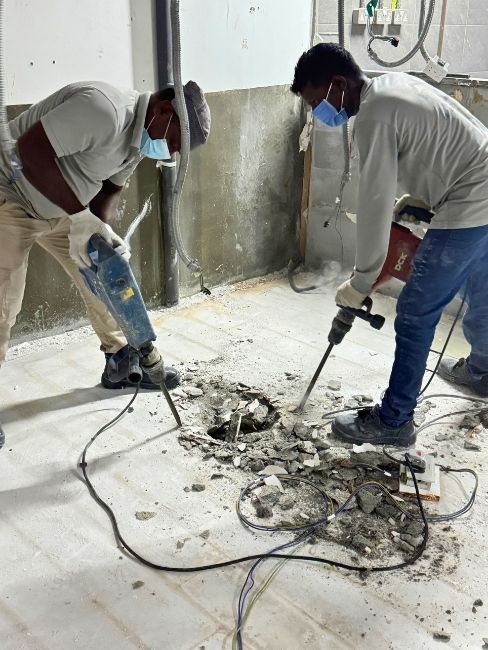
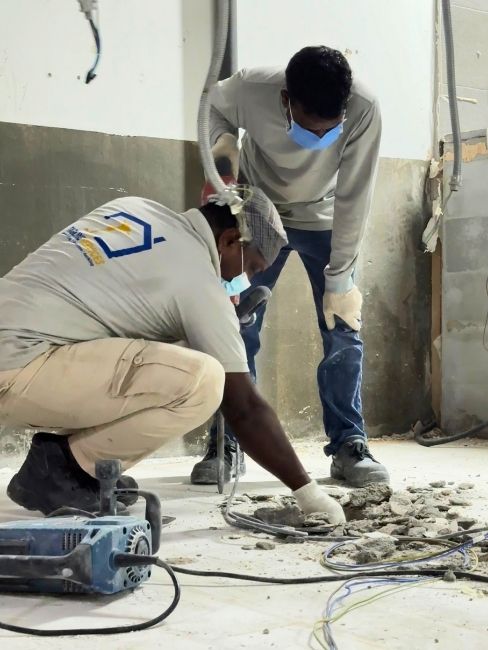
Our project experience includes an eight-storey commercial strip-out delivered through phased, floor-by-floor demolition, as well as a full F&B base-build reinstatement completed within three days under a compressed mall handover programme.
Tagline Services holds BCA registration, bizSAFE STAR, ISO 9001 and ISO 45001 certification status. From selective demolition to full reinstatement, we help businesses restore their premises to the required condition.