
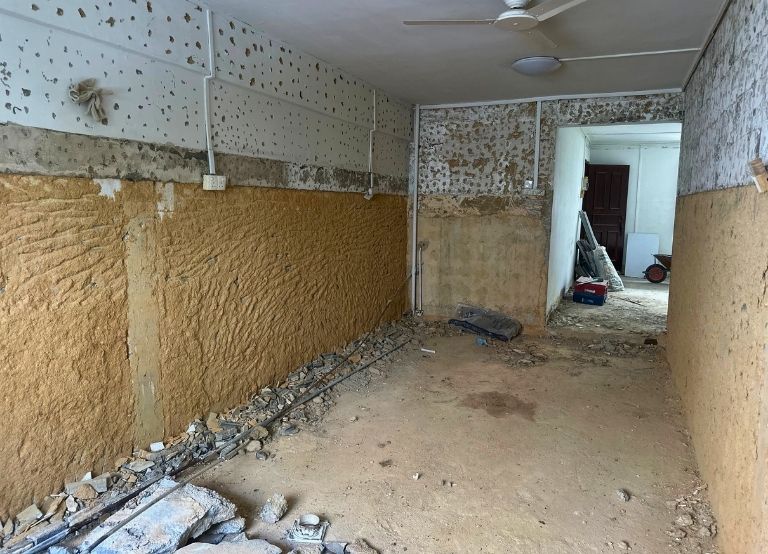


Closing or relocating a restaurant involves more than removing furniture and kitchen equipment. Most mall tenants must return the unit to its original approved condition, often described as “base-build” or “shell-and-core.”
Compared with an office or retail unit, F&B reinstatement in Singapore is more technical because it involves grease management systems, kitchen exhaust ducts, plumbing, gas supplies, fire safety equipment, and extensive M&E installations.
A missed connection, an unsealed penetration, or an incorrectly decommissioned grease trap can delay the landlord’s acceptance. Here is what F&B operators should understand before reinstatement begins.
What does F&B reinstatement include?
The final scope is determined by your tenancy agreement, the landlord’s or the mall’s reinstatement schedule, and the approved fit-out drawings.
A typical restaurant reinstatement may include:
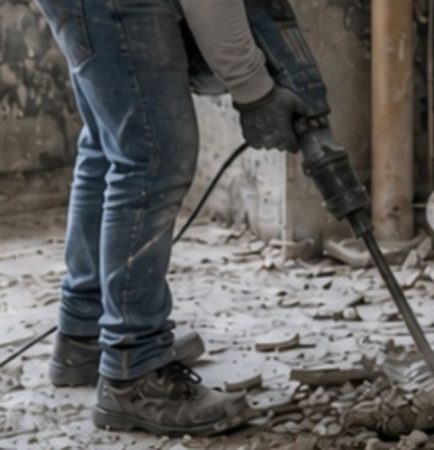
- Removing kitchen equipment and stainless-steel fixtures
- Dismantling counters, cabinets and built-in carpentry
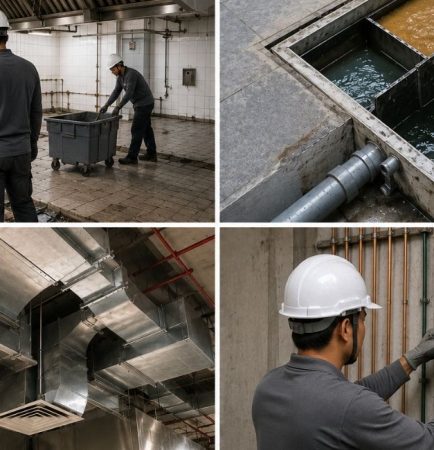
- Removing the exhaust hood, ductwork and exhaust fan
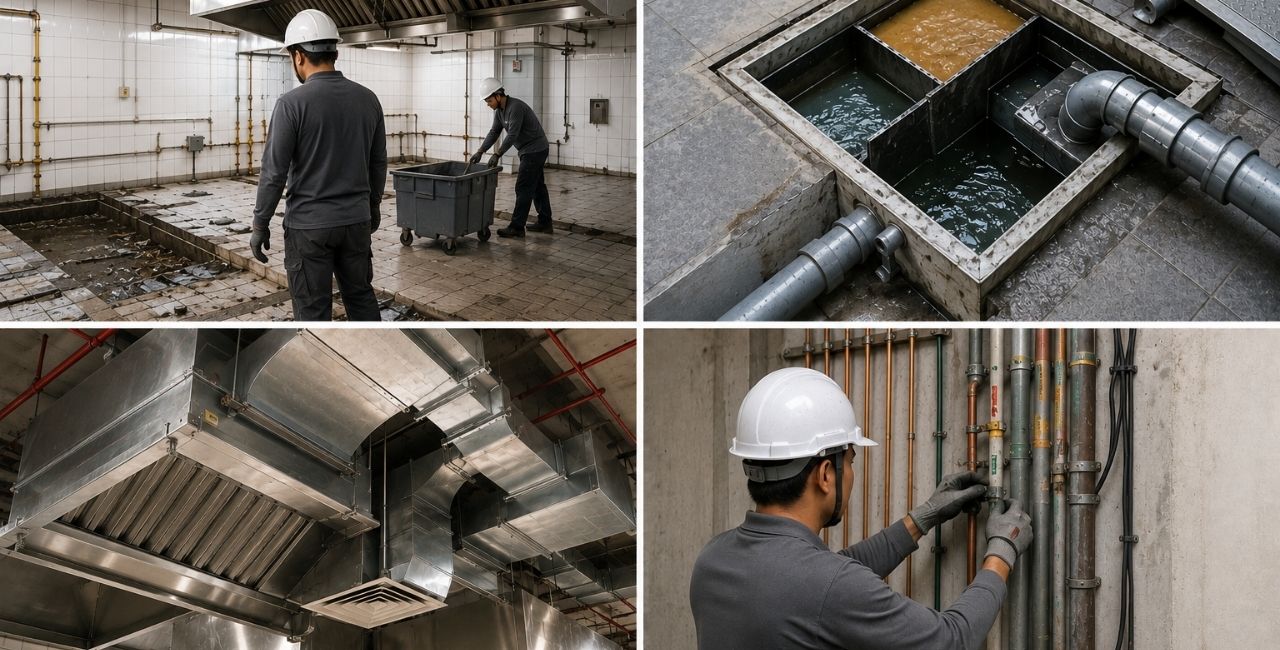
- Cleaning or decommissioning the grease trap
- Disconnecting and capping plumbing and gas services
- Decommissioning electrical and mechanical installations
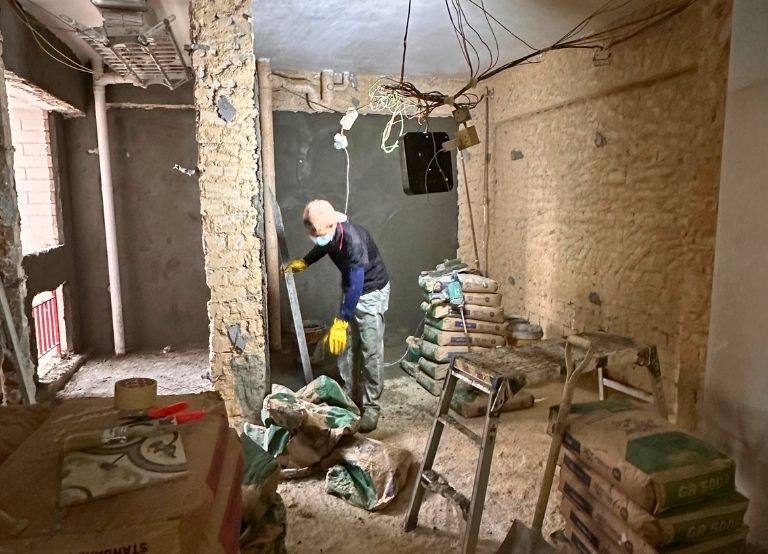
- Removing floor, wall and ceiling finishes
- Dismantling signage, shopfronts and feature walls
- Making good service penetrations
- Removing debris and cleaning the unit
- Completing landlord or mall-management inspections
Not every mall requires the same outcome. Some building owners may retain selected infrastructure for the incoming tenant, while others require complete removal back to the original termination points. Written confirmation is essential.
Why grease traps require careful coordination
Grease traps separate fats, oils and grease from culinary wastewater before it enters the sewerage system. PUB states that establishments handling food including restaurants, coffee shops and hawker centres require grease traps. Greasy waste must be collected and disposed of by an appropriately licensed waste collector.
At lease end, the landlord may require the grease trap to be:
- Professionally cleaned and retained
- Disconnected and removed
- Emptied before decommissioning
- Sealed or capped at the approved connection
- Inspected before the surrounding finishes are reinstated
The correct method depends on whether the grease trap belongs to the tenant, landlord or mall’s central system.
Removal should not begin until the ownership, connection points and handover requirements are confirmed. Disconnecting the wrong line or leaving greasy waste behind can create odour, blockage and hygiene problems and may result in failed inspection.
What happens to the kitchen exhaust system?
Commercial kitchen exhaust systems may include:
- Exhaust hoods and canopies
- Stainless-steel ductwork
- Exhaust fans
- Fire-rated duct enclosures
- Wet-chemical suppression equipment
- Control panels and electrical isolators
- Connections to common exhaust shafts
These components cannot simply be cut away.
Before dismantling, the contractor should establish which sections belong to the tenant and which form part of the building’s shared infrastructure. Services must be safely isolated, and any retained connection should be closed according to the landlord’s requirements.
Where ductwork passes through a wall or ceiling, the opening may also need to be properly made good to reinstate the required fire compartmentation. SCDF’s Fire Code contains specific provisions for commercial kitchen exhaust ducts, including fire-resistance and system arrangements.
If the system includes fire-suppression equipment, the relevant specialist should be involved in its decommissioning. A responsible contractor will coordinate these trades before general demolition proceeds.
What M&E services must be capped?
F&B units typically contain more M&E modifications than standard retail spaces. Reinstatement may involve:
- Electrical distribution boards and isolators
- Power supplies for cooking equipment
- Lighting and control wiring
- Water-supply and discharge pipes
- Gas points
- Air-conditioning and ventilation systems
- Data, alarm and fire-safety connections
“Capping” does not mean hiding a cut cable or pipe above the ceiling. Services should be isolated, terminated and labelled at the location specified by building management.
The mall may require licensed electrical, plumbing, gas or fire-protection specialists to perform or certify selected works. Supporting test reports, photographs or completion documents may also be requested at handover.
What do malls usually require?
Every mall has its own renovation and reinstatement guidelines, but common requirements include:
Approved work permits
Contractor information, insurance documents, risk assessments, worker details and work schedules may need to be submitted before mobilisation.
Restricted working hours
Noisy, dusty or disruptive works are often limited to overnight or off-peak periods. Mall operating hours can also affect deliveries, lift usage and debris removal.
Site and common-area protection
Service corridors, loading bays and cargo lifts may need to be protected before demolition starts. Dust, odour and debris must remain contained within the approved work zone.
Licensed specialist coordination
Electrical, plumbing, gas, fire-protection and mechanical works may require the appropriate licensed or qualified trades.
Waste-management documentation
Renovation debris, greasy waste and other controlled materials must be separated and removed through approved routes by suitable waste contractors.
Formal inspection and rectification
The landlord or mall’s facilities team will inspect the unit against the agreed reinstatement scope. Any defect or incomplete item must be rectified before handover is accepted.
Why F&B reinstatement costs more
A restaurant often costs more to reinstate than a similarly sized retail shop because several specialist systems must be decommissioned in the correct sequence.
The main cost drivers are:
- Kitchen size and equipment volume
- Length and accessibility of exhaust ductwork
- Grease-trap type and location
- Extent of plumbing, electrical and gas modifications
- Fire-suppression and alarm interfaces
- Heavy-duty floor and wall finishes
- Overnight working restrictions
- Loading-bay and lift-access limitations
- Landlord documentation and inspection requirements
A price-per-square-foot estimate may therefore be misleading. An itemised quotation provides a clearer view of what is included and which specialist works are required.
How to avoid a rejected handover
Begin by obtaining:
- The tenancy reinstatement clause
- The landlord’s reinstatement checklist
- The original handover or base-build drawings
- The approved fit-out and M&E drawings
- Written confirmation of any items permitted to remain
- Mall-management requirements and working hours
Your contractor should inspect the unit and build the quotation against these documents.
Before the official inspection, conduct an internal snagging review covering visible finishes, capped services, grease-trap works, exhaust connections, penetrations, documentation and debris clearance.
How Tagline Services manages F&B reinstatement
Tagline Services approaches F&B reinstatement in Singapore as a coordinated technical handover not simply a strip-out.
Our process includes:
- Reviewing the tenancy and landlord’s reinstatement schedule
- Assessing kitchen, exhaust, grease and M&E systems on-site
- Preparing a clear, itemised quotation
- Coordinating permits, access and restricted working hours
- Sequencing specialist decommissioning before demolition
- Providing progress updates and written variation notices
- Conducting an internal snagging inspection
- Supporting the final landlord or mall-management walkthrough
If unexpected conditions are found, we explain the issue, the recommendation, and the cost or programme impact before any additional work proceeds.
Plan your F&B handover early
Plan your F&B reinstatement as soon as your lease-end date is confirmed. Early planning gives you sufficient time to understand your landlord’s reinstatement requirements, coordinate all necessary trades, and secure permits, helping to avoid unnecessary delays, additional costs, or last-minute issues.
Planning an F&B handover? Contact Tagline Services today for a detailed, itemised F&B reinstatement quotation and project timeline to ensure a smooth, stress-free handover.