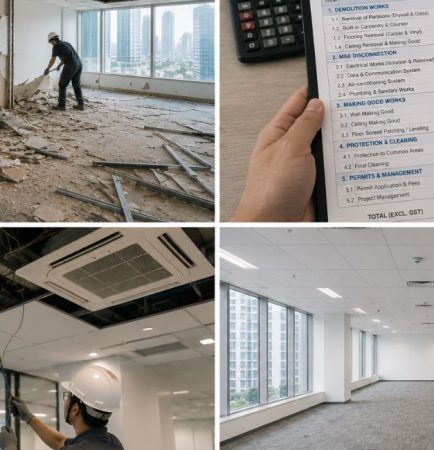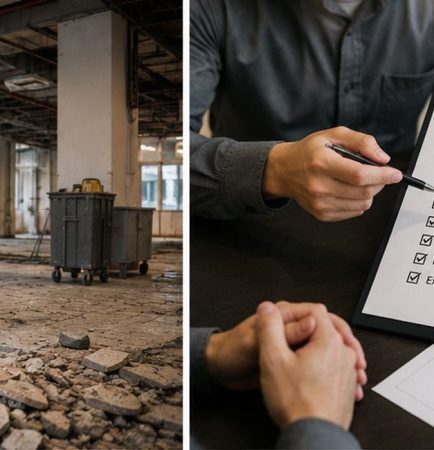



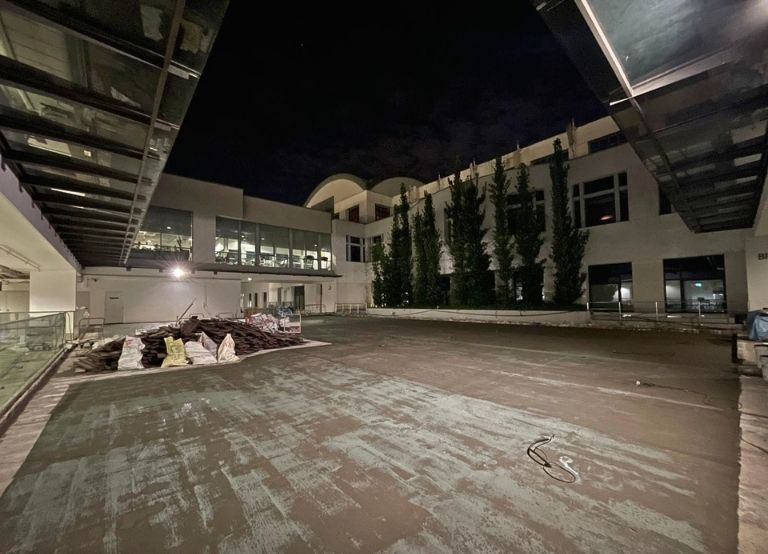
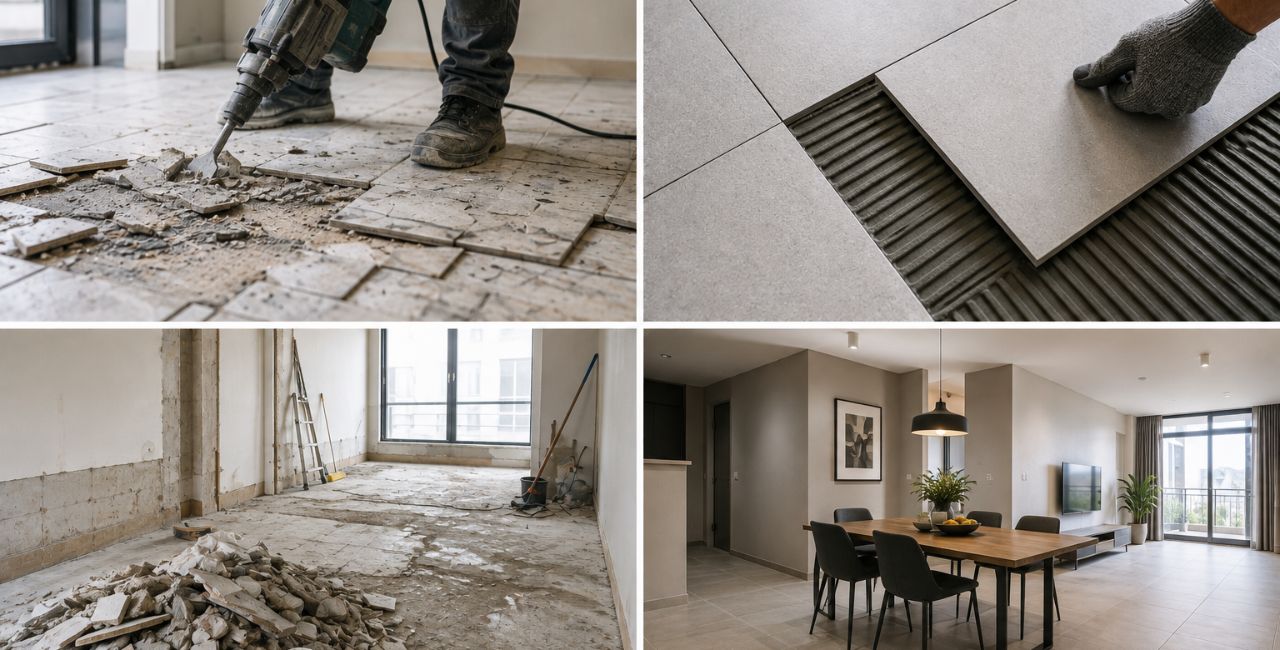
When replacing the flooring in an HDB flat, condominium or landed home, one of the first decisions is whether to hack away the existing tiles or install new finishes over them.
Overlaying is generally faster and less disruptive, while hacking gives you direct access to the underlying screed and substrate. Neither option is automatically better the right choice depends on the existing floor condition, wet-area requirements, desired finish and long-term renovation plans.
Before deciding, arrange for an experienced hacking renovation contractor to inspect the flooring. What appears sound on the surface may conceal hollow tiles, multiple finish layers or an uneven substrate.
What is tile hacking?
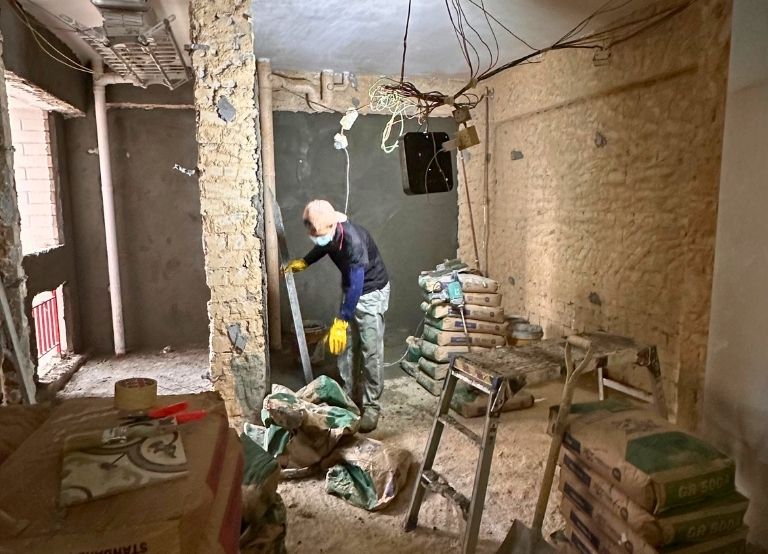
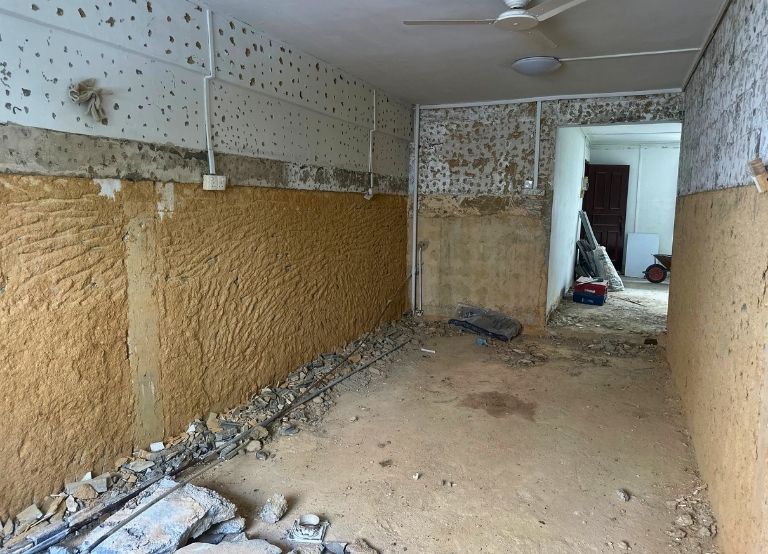
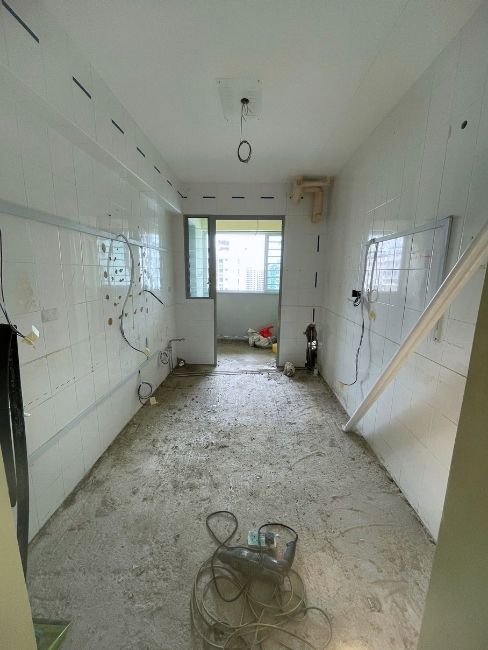
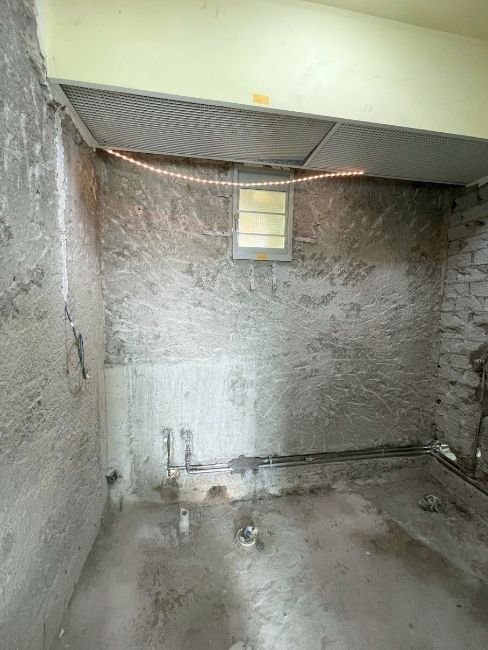
Tile hacking involves removing the existing floor or wall tiles, adhesive and, where required, part of the underlying screed. The area is then cleared and prepared for new waterproofing, screeding or finishes.
A typical hacking scope may include:
- Protecting access routes and retained finishes
- Removing existing tiles
- Removing adhesive or affected screed
- Clearing and disposing of debris
- Inspecting the exposed substrate
- Preparing the area for waterproofing or new finishes
Hacking is usually considered when the existing tiles are hollow, loose, cracked, uneven or already covered by another finish layer.
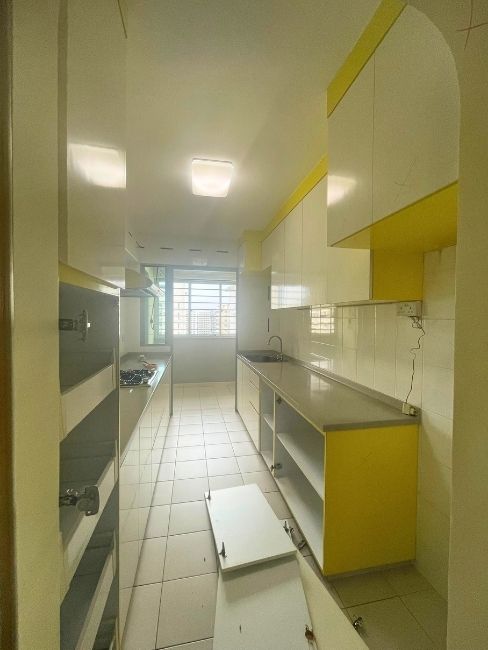
What is tile overlaying?
Overlaying involves laying a new finish directly over the existing tiles without removing them first.
The existing surface must be cleaned and prepared before the new tiles, vinyl or other compatible finish can be installed. Depending on the system, the installer may apply a bonding agent or suitable adhesive.
Overlaying can work well when the existing floor is level, firmly bonded and free from moisture problems. It should not be treated as a shortcut for covering defective flooring.
Hacking versus overlaying at a glance
| Consideration | Hacking | Overlaying |
| Project duration | Longer | Usually faster |
| Noise and dust | Higher | Lower |
| Upfront cost | Usually higher | Usually lower |
| Floor height | Can be reset | Increases |
| Substrate inspection | Fully accessible | Limited |
| Hollow or loose tiles | Removes the problem | May trap the problem |
| Waterproofing renewal | Possible | Existing system remains |
| Debris volume | Higher | Lower |
| Long-term flexibility | Greater | Depends on existing condition |
When is hacking the better option?
Existing tiles are hollow, loose or cracked
Hollow tiles indicate that parts of the finish may no longer be properly bonded. Installing another layer over an unstable base can transfer the problem to the new flooring.
A professional contractor can carry out a preliminary assessment, but the complete substrate condition may only become visible after removal.
There are already multiple flooring layers
Older resale flats and condominiums may contain two or more layers from previous renovations. Adding another layer can increase floor height and create awkward transitions between rooms.
Hacking allows the renovation team to remove the accumulated finishes and rebuild from a more suitable level.
You want to renew wet-area waterproofing
Bathrooms and other wet areas require particular care. Overlaying changes the visible finish but does not replace the waterproofing system beneath the existing floor.
If there are signs of leakage, deteriorated waterproofing or defective screed, a fuller removal and rectification scope may be necessary. HDB notes that ceiling leaks often arise from wear to the waterproof membrane and screed in wet areas.
Floor levels need to be corrected
Hacking may be preferable when the existing floor is uneven or when the new design requires coordinated levels between the living room, kitchen, bathrooms and bedrooms.
It also provides more flexibility around door clearances, built-in carpentry and transitions between different flooring materials.
You are planning a long-term renovation
For homeowners undertaking a full resale-flat renovation, hacking provides a cleaner starting point. It allows the renovation contractor to inspect the underlying condition and coordinate the new flooring with plumbing, waterproofing and carpentry works.
When is overlaying the better option?
The existing tiles are stable and level
Overlaying may be suitable when the tiles are firmly bonded, the floor is reasonably level and there are no signs of moisture or substrate problems.
The surface should still be inspected and prepared correctly. New flooring is only as reliable as the layer supporting it.
You want a faster renovation
Because there is less demolition and debris, overlaying can shorten the programme. It may suit homeowners refreshing selected areas without carrying out a full strip-out.
You want to reduce noise and disruption
Overlaying avoids much of the noise, dust and vibration associated with hacking. This can be useful in occupied homes or condominiums with restrictive renovation schedules.
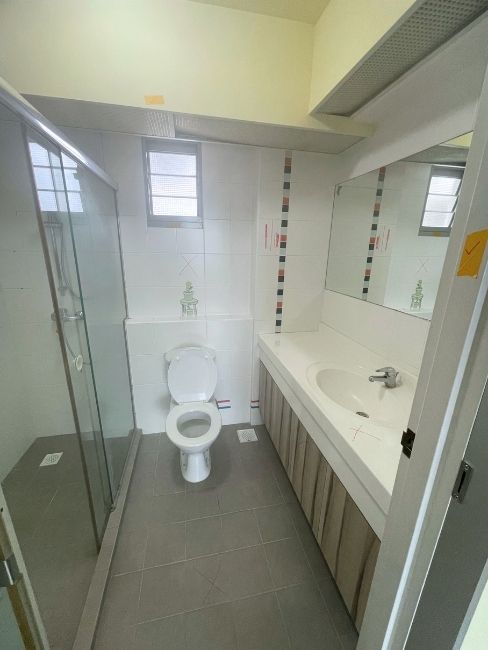
Your new HDB flat is within the wet-area restriction period
HDB applies a three-year restriction on removing the provided wall and floor finishes in bathrooms and toilets of newly completed flats. During this period, homeowners may be allowed to install suitable new finishes over the existing flooring, subject to HDB’s prevailing conditions. Review HDB’s current building-work guidelines.
Always confirm the requirements that apply to your flat before proceeding.
What are the potential disadvantages of overlaying?
Overlaying may appear more economical, but several factors should be considered.
Increased floor height
A new layer raises the finished floor. This may affect doors, skirting, cabinet clearances, floor traps and transitions to adjoining rooms.
Existing defects remain concealed
Overlaying does not remove hollow tiles, damaged screed or deteriorated waterproofing. If the original layer later fails, the new finish may also become loose or cracked.
Wet-area drainage may be affected
Bathrooms require suitable gradients towards the floor traps. An overlay must be carefully planned so it does not create ponding, reduce kerb height or interfere with drainage.
Future removal can become more difficult
If the overlaid finish eventually needs replacing, both layers may have to be removed. This can increase the scope and cost of the next renovation.e of Renovation must remain displayed during the project. Review HDB’s current contractor terms and working-hour rules.
What are the disadvantages of hacking?
Hacking generally requires more labour, site protection and waste disposal. It also produces more noise and dust than overlaying.
For HDB flats, noisy works such as removing floor and wall finishes are restricted to approved working hours and must generally be completed within three consecutive days. HDB requires renovation works to be carried out by a contractor listed in its Directory of Renovation Contractors.
Hacking or laying floor and wall tiles may also require a Notice of Alteration to be registered by the appointed contractor, depending on the work.
How should you make the final decision?
Before choosing, ask your contractor to assess:
- Whether the existing tiles are firmly bonded
- Whether multiple finish layers are present
- The condition and level of the substrate
- Signs of leakage or moisture
- Floor-trap and drainage requirements
- Door and carpentry clearances
- Transitions between adjoining rooms
- HDB or MCST renovation requirements
- Your renovation timeline and long-term plans
A trustworthy hacking renovation contractor should explain both options rather than recommend demolition without assessing the existing floor.
How Tagline Services approaches tile hacking
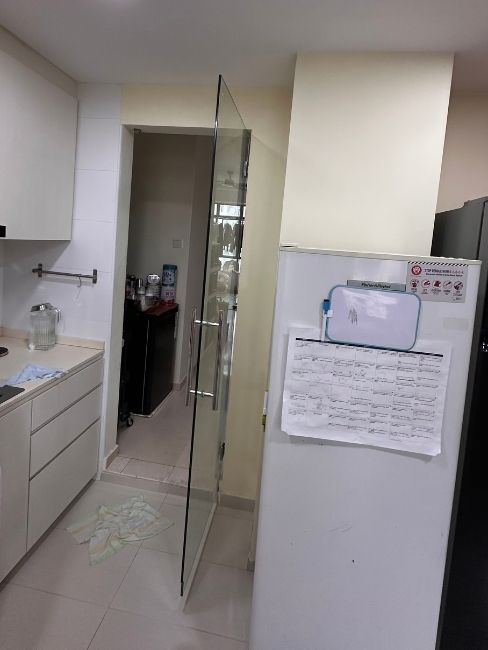
At Tagline Services, we begin by reviewing the property, affected areas and intended new finish. If hacking is required, the quotation is broken down by location and scope so homeowners and interior designers understand what is included.
Our process may cover:
- Site and access-route protection
- HDB notification or permit coordination where applicable
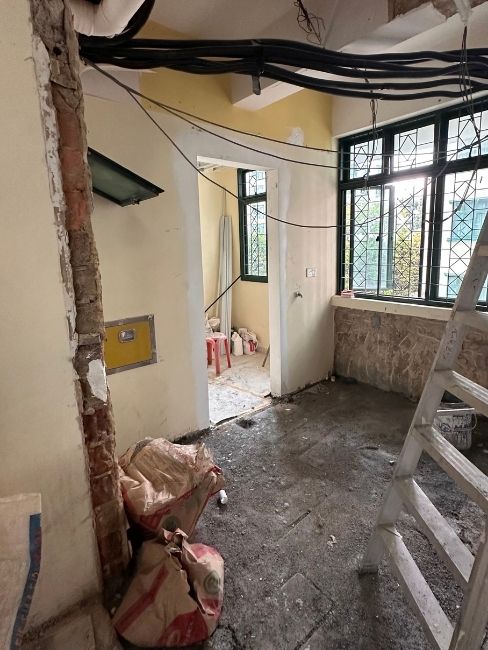
- Controlled tile and screed removal
- Protection of retained structures and services
- Debris clearance and responsible disposal
- Inspection of the completed scope
- A clean handover to the next trade
If additional tile layers or unexpected site conditions are uncovered, we document the finding and explain any programme or cost implications before proceeding.
Hacking or overlaying: which should you choose?
Choose hacking when the existing flooring is defective, floor levels need correction, waterproofing requires renewal or you want a complete long-term renovation.
Choose overlaying when the existing surface is stable, the added floor height can be accommodated and your priority is a faster, less disruptive refresh.
If you are uncertain, arrange a site assessment before confirming the flooring method. An experienced HDB hacking contractor in Singapore can help determine whether removal is necessary and plan the work around the applicable renovation requirements.
Contact Tagline Services for a site assessment of your floor or wall hacking scope.